In Defense of American Truck Simulator's Road Trip DLC.

While American Truck Simulator is certainly not the first video game to try mapping out the entire United States of America in digital form, it's the first where racing isn't the intent behind the game. Games like The Crew and Test Drive Unlimited have tackled the task of making a shockingly huge map of all or part of the United States and letting you race through it at high speeds with performance vehicles. However, ATS is seeking to map out the entire USA (and soon, parts of Canada) from the context of 18-wheeler hauling and shipping. I've owned this game for a few years now, but unfortunately, the intrigue of cruising across the USA never really hooked me like it should because of the only tools at my disposal - heavy, lumbering, torque-y trucks that were designed to get heavy equipment, resources and chemicals from one point to another.
My distaste for ATS had nothing to do with the developers at SCS Software and their creative choices because the game itself is well-built around its premise with a lot of really neat features. A fatigue system makes your screen briefly turn black as if your eyes were becoming heavier and heavier, forcing you to find a rest stop to take a nap. Gas mileage was adequately trimmed to make trips from Chicago to LA require numerous stops for diesel. The variety of shipments you could drive, the diversity of trailers and containers to haul and the complexity of parking those damn things all created a fun simulation of the real deal. And yet, it just didn't hook me because hauling isn't fun for me.
So, when the Road Trip DLC promised consumer vehicles and threw you into the role of a specialized courier delivering small packages placed in the trunk or the passenger seat, I got excited. It was finally time for me to take the premise of ATS and turn it towards sedans, pickup trucks and sports cars. While every racing game has tried to emulate the sense of speed and urgency in racing conditions, I was now being given the opportunity to take it slow while posing as a courier-for-hire, carrying packages that needed to be shipped with an urgency that couldn't be handled by traditional postal or shipping services. Sure enough, when it released a few days ago, this premise is all I can think about now.
The first car pack to be released is the Ford car pack, featuring the new Ford F-150 and Bronco, a 1990's Crown Victoria and a 1960's Mustang. There is a nice variety here in power, utility and function between the pickup, the SUV, the sedan and the classic American muscle car. However, one thing stuck out to me before the release of this pack - none of the cars selected for this Ford DLC are really designed as high performance vehicles. The Mustang itself is maybe 260 horsepower or so, while the high-power vehicles are also the heaviest with the F-150 and the turbocharged Bronco. So, my initial hesitation was regarding how a physics engine designed for gigantic 18-wheelers was going to handle the more extreme power-to-weight ratio of passenger vehicles.
Let me just say that what's here is truly impressive, despite what a few idiots have been saying. So, let me defend the DLC from these handful of shmucks.
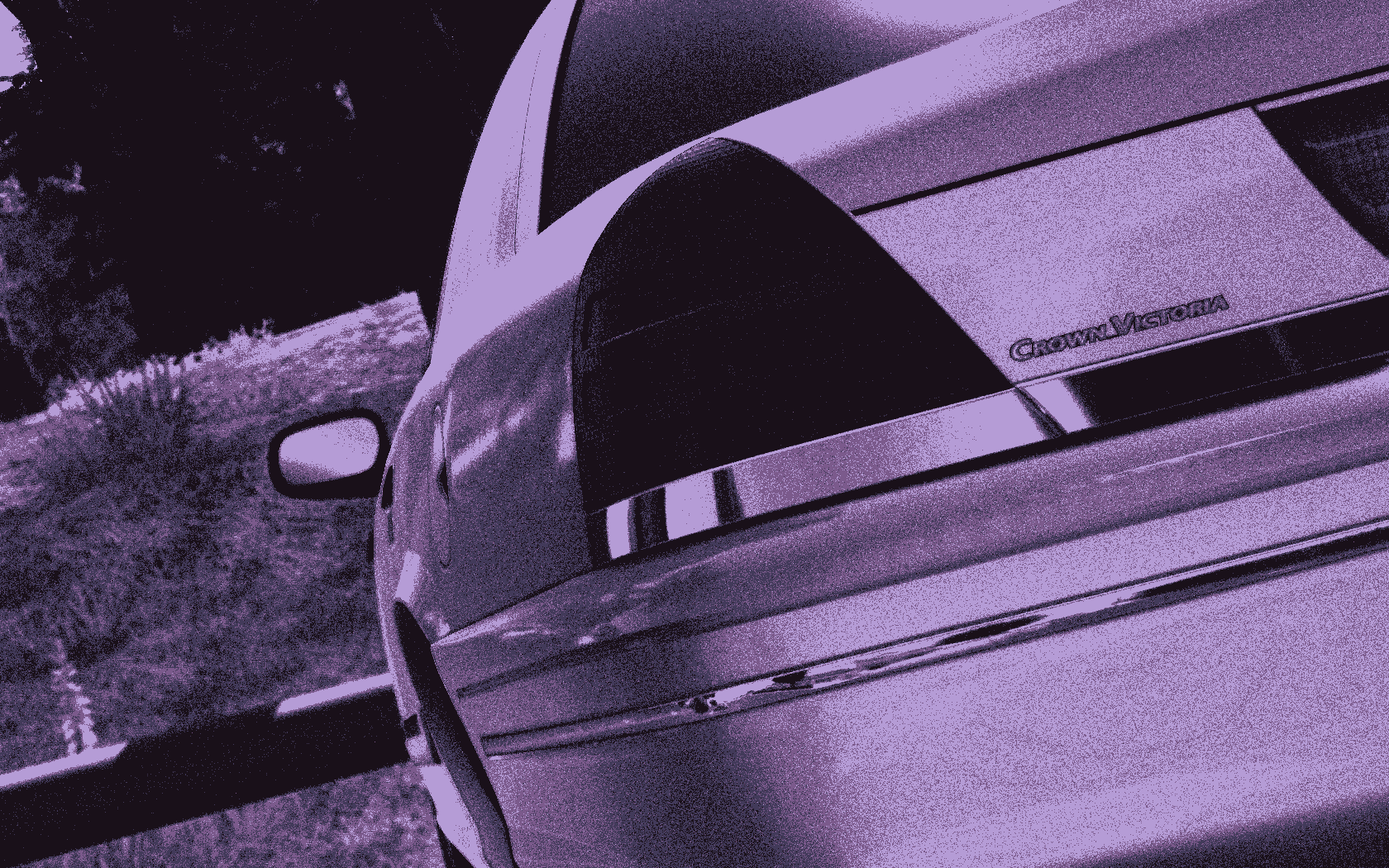
What people have been saying is that the cars don't handle 'realistically' in their minds at high speed. As somebody who (ignorantly and stupidly) drove a heavy sedan and a mid-sized 2000's pickup truck at ridiculous speeds on public roads in my youth, I can tell you for certain that 'realism' isn't the fucking point here. Yes, ATS is a hauling sim and not a performance driving sim, but ATS also shouldn't be chasing a life-like representation of cars. Instead, I think their priority should be on the FEELING of driving those cars.
At lower speeds, each car feels unique. The F-150 and its all-wheel drive systems make the truck's acceleration feel powerful as it should, and the same goes with the Bronco. The Crown Vic and its 3-gear-with-overdrive transmission feels believably sluggish off the line and floaty when navigating intersections. The Mustang, being a 1960's pony car on stock leaf springs, feels like an angry cinder block looking for a crowd of people to hit. They shouldn't feel like performance cars because they weren't fucking built for that. They're consumer cars for fuck's sake, not racecars. Even so, there's still people out there who think performance driving should be a priority anyways. So, let me point something out.
As I mentioned earlier, I've driven ignorantly on public roads. I feel no pride in it, and neither should anybody else - and if they do, I hope they don't take anybody with them when the inevitable car crash happens. HOWEVER, this does give me the experience to acknowledge that the FEELING of driving fast is exactly the same in ATS as it is in real-life. Going that fast on hard, treaded tires and bone-stock parts that are decades old SHOULD feel fucking scary. You SHOULD be getting into frequent accidents for driving like a dumbass. You aren't experiencing the relatively perfect conditions of a race track here. in real life you have to contend with wind and dusty asphalt that wasn't designed for grip. You have to fight with the aerodynamics of the car that were designed to reduce drag and generate slight lift at high speeds rather than downforce. My IRL pickup and sedan felt like they would reach out and strangle me themselves if I didn't slow the fuck down, and that's because they were not designed to go fast. In the same vein, SCS Software's engineering on the virtual representations shouldn't want to go fast, either.
The way that SCS Software makes the player feel at high speeds is exactly how the player should feel, not the cars. I think that's the priority SCS should have when engineering the physics for these cars. The cars themselves shouldn't be exact representations of the real cars in performance driving scenarios because there are no real-life consequences for being stupid in a video game. In a racing simulator, players are often far more brave than real racing drivers are, taking more risks for overtakes and racing lines that aren't sustainable for real racing teams with finances, repairs, maintenance, a championship to win and sponsors to please. The cars in ATS should want to be unpredictable and strange at high speeds because that in its own right produces the same type of fear of consequences that you get from driving like a fucking moron in a real car on public roads. THAT'S what I think.
I don't want realism in ATS' passenger vehicles, I want realism in the feeling of driving a consumer car beyond the limits of its intended engineering. And in that sense, SCS Software have knocked this shit far out of the baseball park. It is genuinely unsettling how familiar the anxiety is when speeding through a highway in a Crown Vic, weaving through traffic as the car itself feels like it's begging me to slow down. This is what I think a driving simulator should set out to do differently from racing simulations. A racing simulator should want to make the player feel like a superhero in a vehicle specifically engineered for high performance driving, while a driving simulator should make the player feel scared to drive quickly. Performance racing in a driving sim shouldn't come naturally - it should be as fearsome as it really is.
And in that sense, I applaud SCS for making the cars drive the way they do. Please, for the love of any Gods you pray to if any at all, DO NOT LISTEN TO THE SIM RACING FREAKS. They want something the game was never and should never be designed for. Instead, focus on what a driving sim should be built for. The slow, safe driving speeds are handled beautifully, with each car accurately represented in the contexts they were originally built for. The cars feel unpredictable and dangerous at high speeds, because that's what showroom-fresh cars of this nature feel like at those fucking speeds.
Make me feel like a scared little kid who saw the boogeyman if I dare to push the throttle pedal too far. Make me sweat bullets if I even think about throwing the car through a corner beyond the posted speed limit. That's what driving like a shithead should feel like. The people being mad about the allegedly-unrealistic performance of the cars beyond the limit are missing the fucking point; they want to feel like a daredevil, but there are already hundreds of games built for that. The Road Trip DLC punishes us for being stupid on purpose with cars that weren't built to handle it, and that is a fucking good thing.
SCS Software have cooked up a gorgeous five-star-restaurant steak, and I'm enjoying it.
The people who say otherwise are the types to sit in front of the same high-quality steak and drown it in fucking ketchup.
ADDENDUM
So, with the venting out of the way, let's be real for a second.
No, these cars don't actually behave like they should if we were expecting realism in performance driving situations. The Crown Victoria should be heavy and clumsy, but not as much as it feels in ATS. The Mustang should feel imprecise and old, but not so sloppy and non-compliant. However, these faults in the simulation create a sense of real anxiety while performance driving, and I think that benefits American Truck Simulator in the context of the entire game. It's designed to replicate street driving, not racing. So, racing on the streets should feel ridiculously stupid and dangerous. Since sim racers like myself are used to versions of these same cars that are realistic, we'd just be whipping these cars through the American streets like we're Formula One drivers. It's just better for ATS as a whole if the cars aren't chasing realism. So no, they're not TOTALLY realistic, but they also shouldn't be.
When you're driving the Ford pack the way SCS Software intended, the cars behave VERY realistically. There are a few issues though, so let me address a couple of them.
Critique 1: Gas Mileage
The consumption of gasoline in these cars is a bit too heavily exaggerated, and should be drawn back a bit in intensity. I've run out of gas in these cars a little bit too often, to the point where I feel like I'm forced to start looking for gas stations at half a tank. I feel like I should be concerned about gas by the time an eighth tank starts drawing near instead. Once the low gas warning shows up, THEN it's time to panic. But if the gas mileage doesn't change, that 'low gas' warning should start showing up at half a tank or so.
Critique 2: Transmission
The clutch feels strange in these cars. Yes, the Vic and the Mustang - the two cars I've driven the most in this pack - have old transmissions with low gear counts, so they're not gonna be very reactive or instantaneous like a six-speed might be. Even so, I feel like the clutch disengagement is unnatural. There have been a few pulls from a stop where I felt like the engine on the Vic should have sputtered and stalled, but it will just keep bogging until it gets to the lower end of the powerband. Maybe this is because the drivetrain flex just isn't quite there - the car should kinda hop and lurch with an unsuccessful launch, but these Fords aren't doing that. They either lazily quit, or they feel like they're being dragged behind a horse until the engine gets some legs under it. Even on a successful pull from a stop, the clutch disengagement feels oddly jarring. I'll be riding the clutch like an idiot trying to find the bite point, and before I know it, it's like the gears sealed themselves together. While there is a nice progression in the clutch in the transition from disengaged to engaged, it feels like the progression in the opposite direction is more like hitting a brick wall all of a sudden instead of a gradual ramp into disengagement.
Critique 3: Sounds
The Crown Victoria sounds the best in my ears out of the four vehicles. It has a nice, low rumble at cruising speeds, but it can get a good growl to it when you're throwing the throttle down. The turbocharged Bronco doesn't exactly have that turbo sound I want to hear though, even though the turbo volume is at the maximum. An EcoBoost V6 turbo should at least whistle a bit at full pressure if I've got the turbo volume over the original setting, in my opinion. The Mustang is probably the worst out of the four; that car just DRONES on the highway, and its volume is mixed way too loudly in comparison to the other cars. I feel as though their recording samples were done in a Mustang that wasn't stock - which, like, I get it, good luck finding a true, showroom pure 60's muscle car in this day and age. Even so, I feel a little more adjustment could've been done to the samples to make it more akin to what they're supposed to be. I've been in old cars manufactured in the same era, and while most of them are pretty loud because of the exhaust systems the owners put on them, a few owners selected to install more reasonable exhaust systems that make highway driving far less of an auditory headache.
Overall
The quality of the content in ATS' Road Trip DLC - used and evaluated with the intentions of SCS Software in mind - is pretty damn good. Making American Truck Simulator's physics engine create believable consumer passenger cars must have been one hell of a challenge, but they succeeded with incredible gusto. While I'm looking forward to getting my hands on the Dodge DLC to rip and tear through America with the V10 Viper and 700 horsepower Challenger, I'm also really interested in feeling what those cars would be like when driven modestly. Ultimately, $10 CAD is more than worth the price of admission in my eyes if you already own ATS. If you don't already own the game though, it might be a bit of a tall ask - especially if you're only interested in the Car Mode. However, since I'd already paid for the game back in 2021 and the hauling just didn't grab me like I thought it would, it's nice to be able to come back to the game and enjoy all of the work SCS has put into their vision of the American highway system - just in a different context.
Comparing to Motor Town: Behind The Wheel
To compare it to a similar game, Motor Town: Behind The Wheel is also an open-world sandbox featuring trucks and cars, hauling, consumer car courier gigs, taxi gigs and stuff like that. I think the logical next step for the Road Trip DLC in comparison to Motor Town is adding taxi gigs. Whether it's operating in a taxi fleet or with a ridesharing app like Uber, it just makes sense. In terms of car handling, ATS' cars feel grippy and responsive while Motor Town's cars feel like they're floating over ice, and the sense of speed just isn't there. The sounds in ATS are better than Motor Town's generic engine notes, but I know ATS can go just a bit further to push the quality of their sounds in the passenger cars. Finally, while the progression in Motor Town while doing gigs in passenger cars is very generous, ATS feels very much the opposite. I'd like to see slightly higher payouts and longer distances for the gigs in ATS, just to try and balance out the costs of maintenance and gasoline a bit better. Maybe the DLC is balanced more towards dedicated truckers who have an entire fleet of CPU-controlled trucks going while they treat the Car Mode like a sort of 'vacation' from trucking themselves. That, unfortunately, means you're more likely to be running in the negatives if you dedicate yourself solely to Car Mode. I'm one of those Car Mode enjoyers. However, I'm also not the target audience for American Truck Simulator, and there are workshop mods already available for ATS that create longer gigs for higher payouts. So I can't really complain too much about that. Generally speaking, I weigh ATS' Road Trip DLC favorably over Motor Town - but if you're looking at buying ATS to just play the Car Mode, you might get a better vanilla experience from Motor Town. But that's up to you to decide.